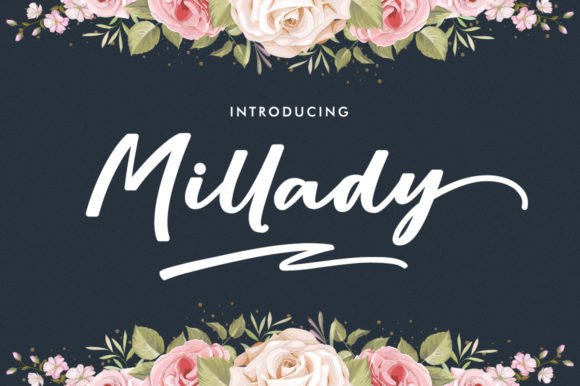
Millady Script: Crafting Elegance for Modern Branding
In the crowded landscape of modern typography, finding a typeface that balances traditional elegance with contemporary utility can feel like searching for a needle in a haystack. Millady Script manages to bridge that gap effectively. It is a handwritten typeface rooted in classic calligraphic traditions, yet it retains a polished, formal aesthetic that feels relevant for today’s design challenges. For designers, entrepreneurs, and content creators, this font offers a distinct voice—one that whispers sophistication rather than shouting for attention.
Visually, Millady Script is defined by its flowing curves and refined strokes. It captures the organic nature of handwriting but elevates it to a level of formality suitable for high-end applications. The letterforms connect fluidly, creating a rhythmic cadence that guides the eye across the page. It avoids the messy, chaotic look often associated with casual handwritten fonts, opting instead for a structured elegance. This makes it a versatile display font that commands attention while maintaining a sense of intimacy. Whether used for a logo or a headline, it introduces an immediate sense of class and intentionality.
The Anatomy of a Versatile Typeface
Understanding the visual personality of Millady Script is the first step in utilizing it effectively. It sits comfortably in the realm of script fonts, but its utility extends far beyond simple decoration. The font features a classic root, meaning it draws inspiration from historical calligraphy, yet the execution feels modern and crisp. This duality allows it to fit into various contexts, from vintage-inspired branding to sleek, contemporary editorial layouts.
One of the most significant technical advantages of this typeface is its PUA encoding (Private Use Areas). For the uninitiated, this might sound like technical jargon, but the practical benefit is immense. It means that every glyph, swash, and stylistic alternate included in the font package is accessible without needing advanced design software. Whether you are working in a simple text editor or a complex vector program, you can access the full range of delightful embellishments. This accessibility empowers small business owners and hobbyists to create professional-grade typography without a steep learning curve.
Real-World Applications: Where Millady Script Shines
The true value of a premium font lies in its adaptability. Millady Script excels in environments where emotional connection and brand perception are paramount. Here is how different professionals can leverage its strengths:
- Logo Design and Brand Identity: For businesses in the beauty, fashion, wedding, or luxury service sectors, a logo sets the tone. Millady Script provides the perfect foundation for a brand identity that needs to convey trust, elegance, and personal touch. It works beautifully as a primary wordmark or as a secondary accent to a serif font or sans serif font.
- Wedding Stationery and Events: It is no surprise that this typeface works perfectly in the world of weddings. From save-the-dates to menus and signage, the font adds a romantic, handcrafted feel that mass-produced templates often lack.
- Packaging Design: In packaging design, shelf appeal is everything. Millady Script can highlight product names or flavor profiles, adding a gourmet or artisanal quality to the visual hierarchy. It signals to the consumer that the product inside is crafted with care.
- Editorial and Publishing: In magazines and blogs, large pull quotes set in Millady Script can break up long blocks of text, adding visual interest and drawing the reader’s eye to key insights.
Strategic Implementation: Pairings and Hierarchy
Using a script font effectively requires a bit of strategy, particularly regarding font pairing. Because Millady Script is rich in detail and personality, it generally performs best as a headline or accent font rather than for body copy. If you use it for long paragraphs, you risk compromising readability.
A classic approach in modern typography is to pair a script with a neutral counterpart. For example, combining Millady Script with a clean sans serif font like Montserrat or Lato creates a striking contrast. The sans serif provides the stability and legibility for body text, while Millady Script delivers the emotional punch in the headers. Alternatively, pairing it with a sturdy serif font can create a more traditional, editorial look reminiscent of classic literature or high-fashion magazines.
When establishing a visual hierarchy, use Millady Script to denote importance. A subheading in this font can bridge the gap between a bold, all-caps headline and a standard paragraph. This variation in type style helps organize information, making your content more digestible and engaging for the audience.
Practical Tips for Evaluation and Licensing
Before integrating any creative font into your workflow, a practical evaluation is necessary. First, consider the context of your project. Is the tone formal or casual? While Millady Script leans formal, its versatility allows it to adapt to whimsical designs depending on the color palette and imagery used alongside it.
Next, test the font pairings early in the design process. Do not wait until the layout is finalized to realize that your header and body fonts are clashing. Place them side-by-side to ensure their x-heights and visual weights are complementary.
Finally, review the licensing. Since Millady Script is a commercial font, you must ensure your license covers your intended use. If you are a designer creating a logo for a client, verify if the license transfers or if the client needs to purchase their own copy for internal use. If you are using it for social media graphics or web design, check that the web-font formats (WOFF/WOFF2) are included. Adhering to these licensing details protects your business and respects the type designer’s craft.
In conclusion, Millady Script is more than just a collection of letters; it is a design asset